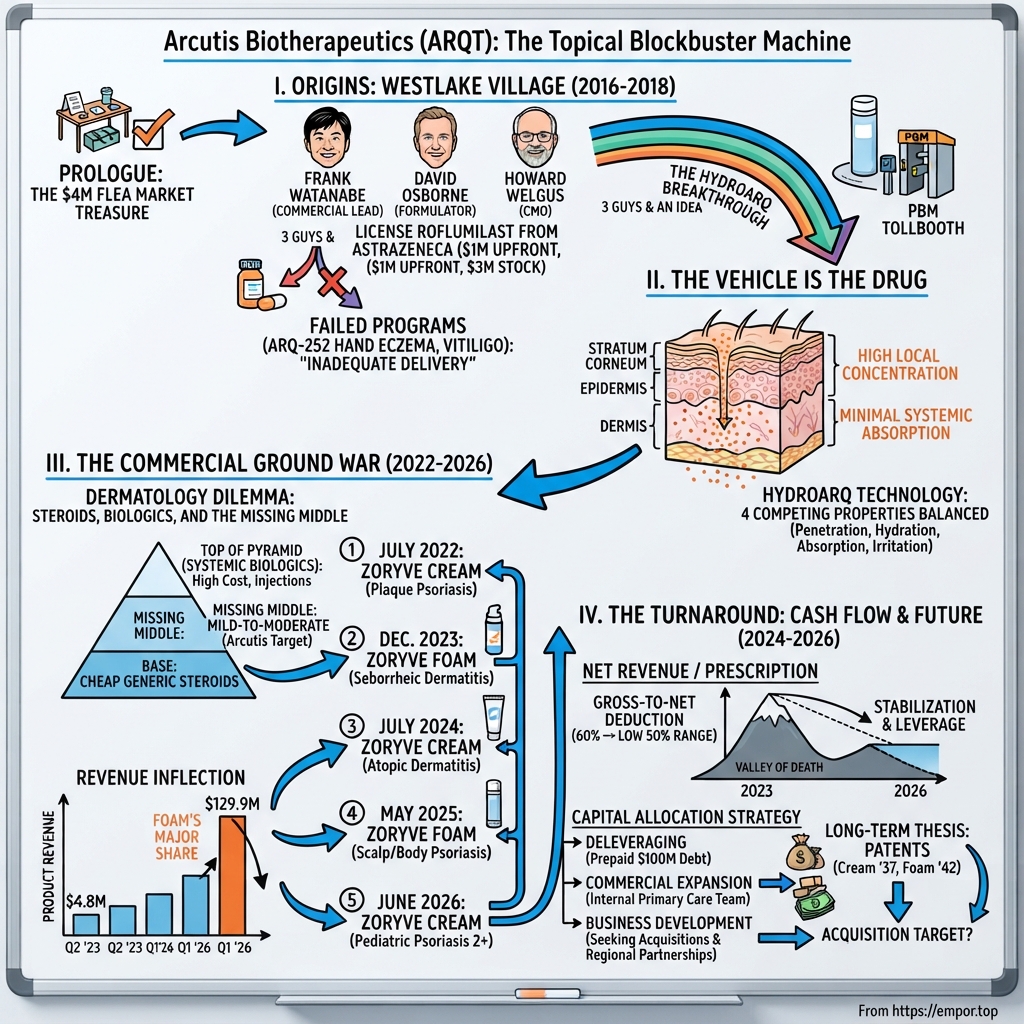
Arcutis Biotherapeutics: The Topical Blockbuster Machine
I. Prologue & The $4 Million Flea Market Treasure (0:00 – 0:15)
A Check Too Small to Notice
Picture the other side of the table in July 2018. AstraZeneca was a global pharmaceutical giant with oncology, cardiovascular, and respiratory franchises generating tens of billions of dollars a year. Among its portfolio assets sat roflumilast, a once-daily pill for chronic obstructive pulmonary disease that had first been approved in the United States in 2011.1 It was a commercially viable therapy for chronic patients, but it was nobody's idea of a growth driver.
Across the table sat Arcutis, a fledgling startup based in Westlake Village, California, seeking a narrow set of rights: to formulate roflumilast for the skin rather than administer it orally or through an inhaler. AstraZeneca agreed, granting Arcutis exclusive worldwide rights to roflumilast as a topical product for dermatological uses only.2
The upfront consideration was modest. Arcutis paid AstraZeneca $1.0 million in cash and issued 484,388 shares of Series B preferred stock.2 The "$4 million" figure often cited in industry accounts reflects the estimated paper valuation of that preferred equity combined with the cash payment—a rounding error on AstraZeneca's balance sheet. The agreement also included development milestones and low-to-high single-digit royalties on net sales, which is where AstraZeneca's primary upside would lie if the formulation succeeded.2
The Punchline
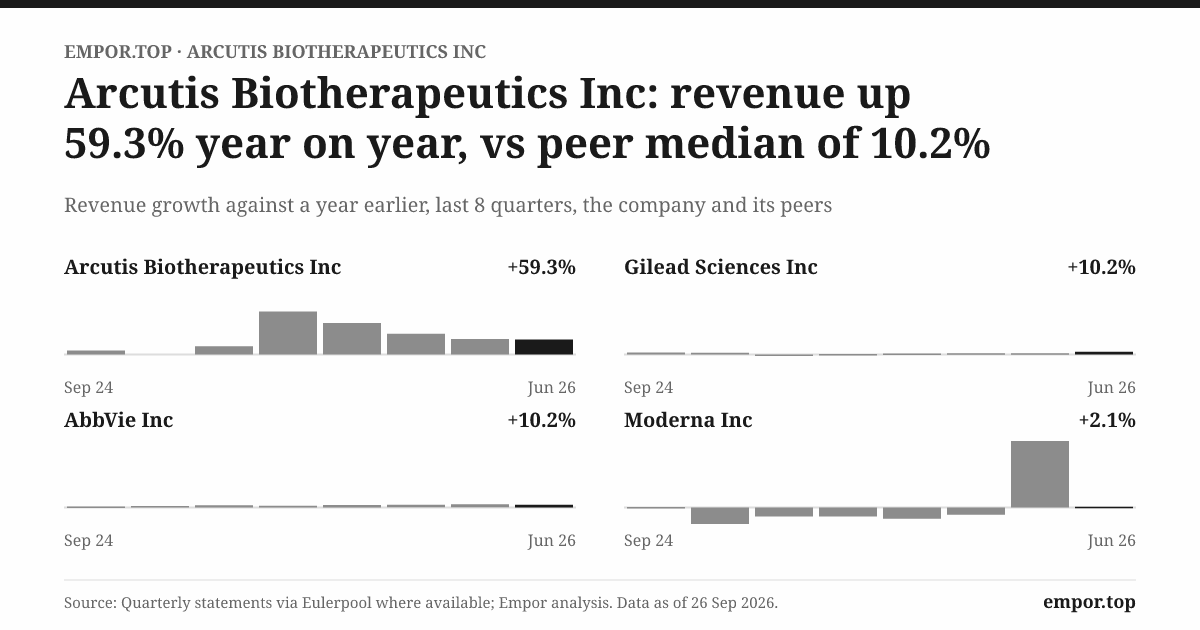
The bet paid off. Seven years later, the reformulated molecule—commercialized under the brand name Zoryve—generated $372.1 million in net product revenue in 2025, up 123% from the prior year.3 In the fourth quarter of 2025, Arcutis posted $26.2 million in positive operating cash flow and recorded net income of $17.4 million for the quarter.3
That commercial momentum carried into 2026. In August 2026, Arcutis raised its full-year net product sales guidance to a range of $525 million to $540 million, after starting the year at $455 million to $470 million and raising expectations once already in February.34 The second quarter of 2026 alone delivered $129.9 million in product revenue and $15.0 million in net income.4
Today, Zoryve is commercialized as three creams and one foam across plaque psoriasis, atopic dermatitis, and seborrheic dermatitis, with regulatory approvals reaching down to toddlers.14 On the company's August 2026 earnings call, management stated that Zoryve held a share "just shy of 50%" of the branded non-steroidal topical category.5
The Thesis, Stated Carefully
The popular narrative frames Arcutis as an opportunistic buyer who struck gold at a corporate garage sale. A more grounded view treats the company as a case study in specialty-pharma arbitrage: take a biological mechanism already validated in human clinical trials, eliminate systemic side effects through targeted local delivery, and navigate the commercial tollbooths of pharmacy benefit managers that dictate net realized revenue per prescription.
Each facet of that thesis requires scrutiny against the company's operating record. Did Arcutis build a durable drug-delivery platform, or did it ride a single compound? Does a formulation patent provide a defensible competitive moat or a porous perimeter? And did management allocate capital responsibly, or bring the company perilously close to insolvency in 2023? The historical record assesses those questions more critically than a rising share price suggests.
Myth vs. Reality: The "Discarded Molecule"
Common industry accounts suggest that AstraZeneca "abandoned" roflumilast. That framing overstates the case. The oral formulation remained an approved COPD therapy; AstraZeneca licensed away only the dermatological field, an indication it had no strategic intent to pursue.21 The core insight was not reviving a defunct drug, but recognizing a separate clinical utility for a validated molecule and securing the rights before the broader market revalued it.
The analysis that follows proceeds across four acts: a dermatology market defined by an enduring treatment void; the chemical engineering deployed to solve it; a severe commercial and liquidity crunch in 2022 and 2023; and a multi-label turnaround that transformed a cash-burning biopharma into a profitable commercial enterprise. It begins with that void.
 Subscribe on LinkedIn
II. The Dermatology Dilemma: Steroids, Biologics, and the "Missing Middle" (0:15 – 0:38)
The Tube in the Medicine Cabinet
Almost every household managing psoriasis or eczema has the same fixture tucked inside a medicine cabinet: a half-squeezed tube of topical corticosteroid. It is inexpensive, acts quickly, and almost always comes with strict instructions from the prescribing physician: use it for two weeks at most, keep it off the face, avoid skin folds, and taper off gradually.
Those warnings exist because topical corticosteroids, for all their anti-inflammatory power, remain blunt instruments. Used chronically, they can thin the skin, cause stretch marks and visible blood vessels, and—when absorbed in significant quantities—suppress the body's natural hormone regulation. That risk is especially acute in pediatric patients, whose higher skin surface area relative to body weight allows greater systemic absorption.5 Corticosteroids work well for acute flares, but they present persistent safety liabilities for diseases that span decades.
The Penthouse and the Basement
At the other end of the treatment spectrum sit systemic therapies: injectable biologics such as Dupixent for atopic dermatitis, and oral small molecules such as Otezla for psoriasis. In regulatory filings, Arcutis has identified Dupixent, Otezla, Eucrisa, Opzelura, and tapinarof (Vtama) as its primary competitive benchmarks.6 Biologics can be transformative for severe disease, but their high annual price tags and injection requirements lead insurers to restrict coverage largely to moderate-to-severe, treatment-resistant cases.
That creates a vast, underserved tier between inexpensive generic steroids and high-cost biologics. Arcutis estimates that roughly 9 million Americans have psoriasis, about 26 million have atopic dermatitis, and more than 10 million have seborrheic dermatitis, translating to approximately 17 million actively prescription-treated patients across the three conditions.6 The vast majority present with mild-to-moderate disease. They have outgrown intermittent steroid use, but their symptoms are not severe enough—nor are their insurers or personal tolerances willing—to justify escalating to systemic injections.
That clinical gap defines the "missing middle." Before 2016, non-steroidal topical alternatives were largely limited to older calcineurin inhibitors and Pfizer's Eucrisa, a topical PDE4 inhibitor hampered by modest efficacy. The specialty was waiting for a topical therapy that could deliver steroid-like relief without the accompanying safety constraints.
The Economics of a Tube
Understanding the commercial model of chronic dermatological treatments clarifies the underlying business. It is not an acute, one-and-done market; it is a refill business. In 2023, Arcutis Chief Executive Officer Frank Watanabe noted that in any given year, roughly 95% of psoriasis patients are continuing patients rather than new diagnoses, with the company estimating that a typical Zoryve user consumes about three tubes per year.7 Refills grew from roughly 20% of total prescription volume in the first quarter of 2023 to approximately 33% by July of that year.7
That market dynamic shapes commercial execution. A new topical therapy rarely succeeds by identifying untreated individuals; it wins by convincing dermatologists to switch patients already established on another regimen, usually a topical steroid. A drug's lifetime value depends on therapeutic persistence—whether patients continue refilling month after month. A product that is cosmetically elegant and safe for continuous, long-term application possesses a structural advantage in driving that refill cadence.
The Biology: Turning Down the Volume
The biological target Arcutis pursued was phosphodiesterase-4, or PDE4. Mechanistically, immune cells use an intracellular messenger called cyclic adenosine monophosphate (cAMP) to act as a natural brake on inflammation. PDE4 is the enzyme responsible for breaking down cAMP. Block PDE4, and cyclic AMP accumulates; the brake holds, downregulating pro-inflammatory cytokine production.1
Because that regulatory mechanism sits upstream of numerous signaling cascades, PDE4 inhibition functions like a broad-spectrum dimmer switch rather than a targeted molecular scalpel. That biological breadth explains why a single active ingredient could plausibly show efficacy across plaque psoriasis, atopic dermatitis, and seborrheic dermatitis simultaneously—three conditions driven by distinct immune pathways. It also underpins why management points to case reports spanning dozens of other inflammatory skin conditions.5
The Precedent: A $13.4 Billion Proof Point
The commercial viability of PDE4 inhibition had already been demonstrated by Celgene's oral small molecule, Otezla (apremilast). When Bristol-Myers Squibb acquired Celgene, antitrust regulators forced a divestiture, prompting Amgen to purchase Otezla for $13.4 billion in cash in August 2019.8 That transaction demonstrated that an oral PDE4 inhibitor for psoriasis could command a valuation rivaling established pharmaceutical franchises.
Oral delivery, however, brought significant clinical drawbacks. Because swallowed pills circulate throughout the bloodstream, they bathe the gut and the central nervous system, causing gastrointestinal adverse events such as diarrhea, nausea, and vomiting that defined the class's real-world tolerability profile. Systemic dosing had to remain conservative to avoid patient discontinuation, which capped the anti-inflammatory potency delivered to the skin.
The Strategic Insight
Arcutis's founding thesis emerged directly from that pharmacological constraint: what if the most potent available PDE4 inhibitor were formulated to penetrate directly into diseased skin at high local concentrations, while keeping circulating levels in the bloodstream minimal? In its IPO prospectus, Arcutis highlighted that roflumilast demonstrated significantly higher enzymatic potency, based on IC50 values, than other PDE4 inhibitors, including the active pharmaceutical ingredients in Eucrisa and Otezla.9
The regulatory label that resulted from that effort showed relatively flat blood concentrations following topical application, reporting diarrhea in 3% of patients and nausea in 1% during pivotal psoriasis trials—a sharp contrast to the gastrointestinal distress common with oral dosing.110 That therapeutic profile captured the commercial arbitrage: preserving the validated biologic mechanism while using local delivery to eliminate systemic tolerability barriers.
Why Not Just Use a JAK Cream?
A rival pharmacological class emerged around the same time: topical Janus kinase (JAK) inhibition. Incyte's Opzelura, a topical JAK inhibitor approved for atopic dermatitis and vitiligo, carries a class-wide boxed warning covering serious infections, mortality, malignancy, major adverse cardiovascular events, and thrombosis, inherited from oral JAK formulations.11 Zoryve's label carries no boxed warning.1
For a clinician prescribing a daily therapy for a child's eczema, that regulatory distinction often dictates the clinical dialogue in the exam room. The critical challenge facing Arcutis was operational: whether an underfunded startup could design a vehicle capable of solubilizing a notoriously stubborn lung pill into a well-tolerated skin cream, and do so before its runway ran out.
III. Origins: Kythera Veterans, Westlake Village, and the 2018 AstraZeneca Bargain (0:38 – 1:02)
Three Guys and an Idea
In June 2016, the company was incorporated in Delaware as Arcutis, Inc., establishing its headquarters in Westlake Village, California—a suburban corridor northwest of Los Angeles associated more with Amgen's corporate campus than early-stage venture biotech.9 Looking back a decade later during the company's tenth anniversary in 2026, the chief executive officer characterized those beginnings simply as "3 guys and an idea."5
For its first three years, the startup operated quietly out of public view. Arcutis announced its formal launch only in April 2019, by which point it had completed Series A and Series B venture rounds backed by a syndicate that included Frazier Healthcare Partners, Bain Capital Life Sciences, OrbiMed, RA Capital Management, Hillhouse Capital Group, and Rainbow Group Capital Management.12 Co-founder Bhaskar Chaudhuri assumed the role of chairman of the board.12
Frank Watanabe: The Navy Reservist Who Marketed Enbrel
Todd Franklin "Frank" Watanabe has directed the company since its formative stages, serving as president since 2016 and chief executive officer since 2017.139 His professional background diverged notably from that of a traditional life-sciences founder. Watanabe completed a bachelor's degree in international relations and a master's degree in national security studies at Georgetown University, worked in the federal government, and spent 25 years as a commissioned officer in the U.S. Navy Reserve.13
His pharmaceutical career developed at Eli Lilly and Amgen, where between 2005 and 2013 he contributed to the development of Repatha and Aimovig and directed U.S. marketing for Enbrel across both dermatology and rheumatology.13 Watanabe later served as vice president of strategy and corporate development at Kythera Biopharmaceuticals and co-founded Kanan Therapeutics as chief operating officer.13
That commercial background shaped Arcutis's operating discipline. Having observed Enbrel's trajectory into a dermatology blockbuster, Watanabe approached drug development through the mechanics of payer reimbursement, formulary tiers, and physician prescribing patterns rather than pure molecular pharmacology. On earnings calls, his commentary routinely prioritizes copay dynamics, formulary coverage access, and sales-force targeting over granular receptor biology.
David Osborne: The Formulator
If Watanabe provided the commercial discipline, David Osborne, Ph.D., supplied the chemistry that made the corporate strategy physically viable. Osborne co-founded Arcutis, served as its first employee and chief technical officer, and brought more than 25 years of topical drug development experience, having secured 52 U.S. patents in drug delivery by 2025.1412 The initial executive team also included Howard Welgus, M.D., who served as chief medical officer.12
Osborne's tenure bears directly on questions regarding the durability of Arcutis's competitive moat. In September 2025, Osborne departed Arcutis to become chief innovation officer at Palvella Therapeutics.14 While the formulation chemistry that underpins Zoryve remains protected within approved products and issued patents, the chemical engineer primarily responsible for designing that vehicle is no longer with the company.
The Molecule on the Shelf
While oral roflumilast had been approved by U.S. regulators in 2011 to reduce chronic obstructive pulmonary disease exacerbations, dermatological applications lay outside AstraZeneca's commercial focus.1 For Arcutis, the asset provided an invaluable head start: extensive human safety records and a thoroughly validated mechanism of action. The two steepest hurdles in drug development—verifying clinical tolerability in human trials and demonstrating target engagement—had already been cleared at another pharmaceutical firm's expense.
The Deal Terms
Beyond the $1.0 million upfront cash payment and preferred shares, Arcutis compensated AstraZeneca through sequential development and commercial milestones. It paid $2.0 million following the completion of its Phase 2b plaque psoriasis trial in August 2019, followed by $7.5 million upon Zoryve's initial regulatory approval.2 Commercial obligations stipulated a $5.0 million payment once cumulative worldwide net sales reached $100 million and an additional $10.0 million upon crossing $250 million, alongside tiered low-to-high single-digit royalties on net sales.2 With annual product revenue reaching $372.1 million in 2025, Arcutis crossed that $250 million cumulative sales threshold during that year.3
In total, AstraZeneca's milestone receipts amounted to tens of millions of dollars against an asset that by 2026 was generating more than half a billion dollars in annual revenue. In hindsight, the agreement stands as one of the most commercially lopsided licensing transactions in recent specialty pharma. Yet the more instructive comparison is not with historical industry windfalls, but with Arcutis's subsequent efforts to repeat the same licensing playbook.
Falsification Test: Is Arcutis a Platform or a Molecule?
The bull case for Arcutis rested on the premise that it had built a repeatable in-licensing platform: identify clinically validated systemic compounds, formulate them into topical therapies for the skin, and commercialize them across dermatology. If that model were systematically replicable, the company's other in-licensed pipeline candidates should have translated into viable clinical assets. The historical record indicates they did not.
In January 2018, Arcutis acquired an option for the active compound behind ARQ-252—ivarmacitinib (SHR0302), a selective JAK1 inhibitor licensed from Jiangsu Hengrui Medicine—and exercised that option in December 2019.915 In mid-2021, however, its Phase 2b trial in chronic hand eczema failed its primary endpoint, with none of the active ARQ-252 treatment arms achieving statistical significance compared to vehicle.15
Management attributed the setback to "inadequate local drug delivery to the skin" and terminated a concurrent Phase 2a vitiligo trial on July 1, 2021.15 Arcutis attempted to salvage the asset by reformulating ivarmacitinib with deeper-penetrating delivery technology as ARQ-255 for alopecia areata. In August 2025, the company halted that program as well, noting that while clinical readouts "indicated some level of efficacy," the results "did not meet the Company's threshold for advancement."16
Its subsequent pipeline asset, ARQ-234, abandoned the topical licensing model entirely. Acquired through the 2022 purchase of Ducentis BioTherapeutics, ARQ-234 is an injectable fusion protein targeting the CD200 receptor—a systemic biologic rather than a topical formulation.17 That acquisition marked a strategic pivot rather than a replication of the roflumilast strategy.
The clinical evidence clarifies the limits of the business model. The proposition that Arcutis built a repeatable topical reformulation platform is contradicted by its own pipeline history: two clinical attempts outside roflumilast, one active compound, and zero commercial products. What survives is a narrower, highly lucrative capability: Arcutis has demonstrated exceptional execution in formulating, testing, and commercializing a single active molecule across multiple dermatological indications. Re-establishing the broader platform thesis would require advancing a second topical candidate through a positive Phase 2 readout—a milestone the company has not yet achieved. Why that formulation chemistry succeeded so decisively with roflumilast while failing with a JAK inhibitor turns on the precise mechanics of the drug vehicle itself.
IV. The Vehicle Is the Drug: Formulation Science and the HydroARQ Breakthrough (1:02 – 1:22)
The Wall
Human skin represents one of biology's most formidable physical barriers, and for pharmaceutical developers, one of its most difficult delivery challenges. The outermost layer, the stratum corneum, functions like a brick wall of flattened, dead corneocytes mortared together by lipid bilayers. Its evolutionary mandate is straightforward: keep hydration inside the body while preventing external compounds from penetrating. Any drug that merely rests on the surface accomplishes nothing.
Overcoming that physical barrier introduces a second commercial complication: long-term patient compliance. In chronic dermatological conditions, patients must apply a therapy daily for years. Heavy ointments penetrate the barrier effectively but leave a greasy, messy residue on clothing and bedsheets. Conversely, alcohol-based gels evaporate cleanly but cause sharp stinging when applied to cracked, inflamed lesions. Designing a successful vehicle requires balancing four competing properties: transporting the active compound deep into tissue, hydrating like a rich moisturizer, absorbing quickly without sticky residue, and avoiding application-site irritation. In physical chemistry, those objectives routinely conflict.
What "HydroARQ" Actually Is
Arcutis addressed those formulation hurdles for its cream through a proprietary emulsion it commercialized as HydroARQ Technology, designed as a non-greasy moisturizing cream that spreads evenly and absorbs rapidly into the skin.10 The regulatory package discloses the vehicle's underlying composition: a phosphate-based emulsifier system, cetostearyl alcohol, diethylene glycol monoethyl ether, hexylene glycol, isopropyl palmitate, white petrolatum, preservatives, and purified water.1
In functional terms, the vehicle operates as a coordinated delivery system. Diethylene glycol monoethyl ether serves as an established penetration enhancer, acting as a solvent that facilitates the molecule's passage through the stratum corneum; isopropyl palmitate functions as an emollient; and white petrolatum combined with the phosphate emulsifiers establishes the occlusive, moisturizing base. None of those individual excipients is novel. The formulation innovation lies in balancing stability, sensory aesthetics, and solubility—keeping a potent yet notoriously water-insoluble compound uniformly dissolved throughout its commercial shelf life without crystalizing.
The clinical utility of that vehicle became evident in anatomical regions where topical corticosteroids are typically restricted. In the pivotal DERMIS clinical trials, 72% and 68% of patients with plaque psoriasis in intertriginous areas—sensitive skin folds such as the underarms, groin, and inframammary creases—achieved clear or almost clear skin status, compared to 14% and 17% receiving vehicle cream alone.10 Today, the approved regulatory label permits the use of the 0.3% cream across intertriginous regions in pediatric patients as young as two years of age.1
The Tolerability Dividend
The formulation chemistry also accounts for the therapy's minimal stinging upon application. Across eight weeks of clinical evaluation in psoriasis, application-site pain was reported by just 1% of enrolled patients.10 Management converted that tolerability profile into a central commercial selling point: a non-steroidal therapy that can be applied to any part of the body for an indefinite duration.5 In clinical practice, that attribute simplified the prescribing decision, sparing dermatologists from having to define prohibited anatomical zones or manage complex steroid taper schedules with patients.
The Foam: The Sleeper Asset
The foam formulation—which later evolved into Arcutis's primary revenue engine—targeted a distinct physical challenge: hair-bearing skin. Seborrheic dermatitis and scalp psoriasis occur predominantly across areas where conventional creams mat in hair and alcohol gels drip or sting. Engineering an aerosolized foam that breaks down rapidly upon skin contact without leaving greasy residue requires an entirely different delivery design than an emulsion cream, and topical foam canisters present well-documented manufacturing complexities. On the company's August 2026 earnings call, Watanabe highlighted Zoryve foam as the only non-steroidal therapy delivered in a foam and "effectively the only foam available for doctors."5
That positioning reflects both a commercial advantage and an operational risk. While formulation barriers and aerosol manufacturing requirements create durable hurdles for potential competitors, they also mean Arcutis's largest commercial product relies on a specialized manufacturing format, where any production bottleneck or canister supply disruption would directly impair net sales.
Falsification Test: Is the Formulation Patent Wall a Fortress?
Because primary composition-of-matter exclusivity on the roflumilast molecule expired years ago, Zoryve relies entirely on a secondary estate composed of formulation, pharmacokinetic, and method-of-use patents. Arcutis maintains that the cream formulation is protected through 2037 and the foam through 2042, with management noting on the August 2026 call that 28 distinct patents are listed in the FDA's Orange Book.65
The legal mechanism capable of breaching that barrier is a Paragraph IV certification under the Hatch-Waxman Act, in which a generic manufacturer claims that listed patents are either invalid, unenforceable, or not infringed. That challenge arrived rapidly. Generic specialist Padagis filed an Abbreviated New Drug Application seeking approval for a generic copy of Zoryve cream 0.3%, prompting Arcutis to initiate patent infringement litigation in the U.S. District Court for the District of Delaware in March 2024, ultimately asserting eleven Orange Book-listed patents.218
In April 2025, the two companies entered a joint stipulation staying the litigation and vacating scheduled trial dates. Under the court-approved agreement, the statutory 30-month regulatory stay on FDA approval of Padagis's generic was extended by one day for every day the litigation remains stayed, with Padagis required to disclose its ongoing FDA correspondence to Arcutis.18 Watanabe characterized the stay as "a positive development" that "fully preserves our ability to assert our intellectual property."18
Assessing that development requires distinguishing procedural relief from substantive validation. While the stay postponed courtroom risk and preserved near-term market exclusivity, it provided no legal ruling on patent validity. What it did establish is that a sophisticated generic manufacturer viewed the cream's patent estate as vulnerable enough to challenge within two years of commercial launch. Secondary formulation patents are historically more susceptible to design-arounds and obviousness arguments than primary chemical compound patents. Furthermore, management acknowledged on the August 2026 call that its newest patent issuances do "not change the loss of exclusivity" timelines for the franchise.5
The evidence reframes the bull case: rather than an unassailable legal monopoly, Zoryve operates behind a dense but contestable patent perimeter, with the foam franchise affording a longer commercial runway than the cream. The concrete milestones that will validate or falsify the durability of that estate are straightforward: whether the Padagis litigation resumes, the generic entry dates negotiated in any eventual settlement, and whether additional generic filers target the foam. With the formulation chemistry solved, Arcutis's immediate hurdle in early 2020 shifted to corporate solvency—just as the global financing window prepared to slam shut.
V. Going Public and the First Pipeline Reality Check (2020–2021) (1:22 – 1:40)
Beating the Door Before It Closed
In late January 2020, weeks before global financial markets froze during the onset of the COVID-19 pandemic, Arcutis completed its initial public offering on the Nasdaq under the ticker ARQT. The offering priced 10,781,250 shares at $17.00, including the full exercise of the underwriters' overallotment option, raising gross proceeds of approximately $183.2 million and net proceeds of roughly $167.2 million.19
The timing proved decisive. The capital influx provided Arcutis with critical liquidity just as broader biotech financing windows narrowed, giving management the runway to finance roflumilast through its most resource-intensive phase of clinical development: running parallel, multi-indication Phase 3 trials across thousands of patients.
DERMIS: The Data That Justified the Bet
The foundational clinical evidence for the topical platform arrived through two identical Phase 3 trials, DERMIS-1 and DERMIS-2, which evaluated roflumilast cream 0.3% against its vehicle in patients with plaque psoriasis. At week eight, 42% and 37% of patients receiving roflumilast achieved Investigator's Global Assessment (IGA) success—defined as clear or almost clear skin with at least a two-grade improvement from baseline—compared to 6% and 7% of patients in the vehicle cohorts.10 In clinical practice, roughly two in five treated patients reached clear or almost clear skin, compared to about one in fifteen on placebo cream.
For commercial adoption and patient persistence, the trial's pruritus readouts proved equally vital. Among patients presenting with clinically meaningful itch at baseline, 67% and 69% in the active treatment arms achieved at least a four-point reduction on the Worst Itch Numeric Rating Scale at week eight, compared to 26% and 33% on vehicle.10 Because unremitting itch is frequently what compels patients to seek care and maintain daily application, rapid symptomatic relief directly reinforced treatment adherence.
The safety profile supported the underlying delivery thesis. Adverse reactions occurring above the vehicle rate remained infrequent: diarrhea was reported in 3% of patients, headache in 2%, and insomnia, nausea, application-site pain, and select upper respiratory infections at 1% each.10 For an active compound whose oral counterpart had been constrained by pervasive gastrointestinal distress, holding diarrhea to a 3% incidence confirmed that targeted local delivery had successfully minimized systemic exposure.
The First Stumble
While roflumilast advanced toward regulatory submission, Arcutis encountered its first major pipeline setback. In mid-2021, a Phase 2b trial of ARQ-252 failed to meet its primary endpoint in chronic hand eczema, leading the company to terminate a concurrent Phase 2a vitiligo study on July 1, 2021.15
The failure demonstrated that drug-delivery engineering could not be easily ported from one compound to another. Overcoming the dense, thickened stratum corneum of palmar skin with an entirely different chemical scaffold proved beyond the vehicle's initial capabilities. At the time, Arcutis attributed the outcome to inadequate local drug delivery, stating that it was reformulating the molecule to "deliver much more active drug to targets in the skin" and intended to "re-enter the clinic" with the revised formulation.15 That program, advanced as ARQ-255, was ultimately discontinued four years later after failing to achieve adequate efficacy.16
"Four Products in One"
Faced with a pipeline concentrated in a single successful compound, management sought to extract the commercial breadth of a multi-product portfolio from one active molecule. By 2023, Watanabe framed topical roflumilast as "potentially four products in one," targeting commercial rollouts spaced two to three quarters apart across plaque psoriasis cream, seborrheic dermatitis foam, atopic dermatitis cream, and scalp-and-body foam.7 Management estimated that this multi-label strategy addressed an aggregate population of approximately 13 million patients—more than six times the roughly 2 million prescription-treated psoriasis patients in U.S. dermatology clinics that Zoryve initially targeted.7
The strategy offered operational leverage: sequential label expansions utilized the same underlying safety database, shared established manufacturing infrastructure, and relied on the same dermatology sales representatives and commercial payer contracts. However, the rapid launch cadence introduced a structural financial burden that management acknowledged: each new indication resets the gross-to-net learning curve, as initial prescription demand surges well before commercial health plans formally establish formulary coverage and reimbursement tiers.7 Launching multiple indications in quick succession meant Arcutis would absorb compounding gross-to-net deductions over several years, depressing realized revenue per prescription at the exact moment its balance sheet could least absorb the dilution.
This multi-indication rollout ultimately laid the groundwork for a commercially viable franchise, but pursuing it on a limited cash cushion left little margin for operational error. By late 2021, the company's enterprise value rested almost entirely on a single molecule and management's capacity to commercialize it. Securing regulatory approval proved to be only the opening requirement; the more difficult challenge lay in navigating the commercial reimbursement landscape that followed.
VI. The Valley of Death: Launch Friction, PBM Squeeze, and the $2.50 Dilution Abyss (2022–2023) (1:40 – 2:05)
Approval Day
On July 29, 2022, the FDA approved Zoryve cream 0.3% for plaque psoriasis in patients 12 and older, including intertriginous presentations, with commercial product reaching retail pharmacies by mid-August.10 It was the first regulatory approval in Arcutis's corporate history. In practice, however, it marked the beginning of the most precarious two-year operating stretch the company would face.
The competitive landscape was already established. Dermavant Sciences had secured approval for its rival non-steroidal topical agent, Vtama (tapinarof) cream, in May 2022, also targeting plaque psoriasis.20 Launching into dermatology clinics within months of each other, the two branded therapies entered a direct contest to persuade prescribers to transition patients away from cheap, entrenched topical corticosteroids.
The "Bold Experiment" in Pricing
Arcutis adopted an unconventional pricing posture from day one. It set Zoryve's wholesale acquisition cost at $825 per tube—roughly 40% to 60% below the list prices of recently launched branded topicals, and significantly lower than Vtama's $1,325 list price.21 Watanabe framed the strategy as "a bold experiment," intended to secure formulary coverage more rapidly from commercial insurers and lower the prior-authorization hurdles that routinely restrict access to novel dermatology drugs.21
Myth vs. Reality: The "$0 Copay" Trap
Industry commentary often characterized the launch as an indiscriminate giveaway fueled by zero-dollar copay cards. The commercial structure was more measured: Arcutis established a $25 copay for commercially insured patients and a $75 threshold for the uninsured, with then-chief commercial officer Ken Lock arguing that "a zero-dollar copay isn't always the best in that it devalues the product."21
The genuine trap was not the patient copay level itself, but the widening chasm between Zoryve's published list price and the net cash Arcutis ultimately collected.
Gross-to-Net, Explained
The core commercial mechanic was straightforward. A pharmaceutical list price functions like the sticker price on a car: virtually no institutional payer pays it. Before pharmacy benefit managers formally place a newly launched therapy on formulary, filled prescriptions frequently go unreimbursed by insurers, leaving the drugmaker to absorb the product cost through copay assistance and bridge-supply programs. Even after securing formulary placement, the manufacturer must concede substantial mandatory rebates to PBMs and statutory discounts to government programs. The proportion of list price absorbed by those combined concessions represents the gross-to-net deduction.
During early commercialization, with covered lives still limited, that deduction was punitive. While Arcutis withheld specific gross-to-net metrics during early quarters, its eventual financial disclosures highlighted the severity of the drag: management reported achieving "sequential improvement" to a gross-to-net deduction "in the mid 60 percent range" by the fourth quarter of 2023, more than sixteen months after launch.22 In effect, even after notable operational progress, nearly two out of every three list-price dollars were lost to intermediaries before reaching Arcutis.
The resulting divergence between clinical adoption and cash receipts was severe. Prescriptions climbed steadily, but net revenue lagged. Net product revenue in the second quarter of 2023 totaled just $4.8 million, and full-year 2023 product revenue reached only $29.2 million.722 Against those modest revenues, the company incurred a full-year net loss of $262.1 million in 2023, consuming cash far faster than the commercial launch could replenish it.22
The August 2023 Call: Confidence Before the Fall
The contemporaneous record from that summer captures the growing tension between management's public confidence and underlying commercial strain. On the company's August 2023 earnings call, leadership reported that Zoryve had obtained commercial coverage across all three major national PBMs, establishing access for 80% of commercial lives and drawing more than 7,500 unique prescribers.7 Watanabe reiterated his conviction that gross-to-net deductions would eventually settle at a steady-state level "somewhere in the 40% to 60% range," while acknowledging it would "take us a little bit longer to get there than what we had initially anticipated."7
Then-chief financial officer Scott Burrows assured investors that Arcutis remained "well capitalized with cash of $270 million" and pointed to potential non-dilutive licensing agreements outside the United States as additional runway support.7 When questioned about expanding into primary care, Watanabe was unambiguous, stating, "we do not intend to build our own primary care sales force."7 That commitment would later be tested.
The same call illustrated how management sought to balance cash preservation against commercial expansion. Research and development expenditures dropped as the roflumilast registration trials concluded, with Burrows outlining "broader efforts to reduce spend in our early-stage R&D programs."7 Yet commercial expenses rose in parallel, including a connected-television advertising push designed to drive patient demand once insurance coverage was established.7 Furthermore, while approximately 7,000 of roughly 13,000 targeted dermatologists had written at least one Zoryve prescription, converting the remaining universe signaled diminishing returns, as incremental clinicians were structurally harder to win over.7
Arcutis was effectively trimming future pipeline investment to finance the commercial demands of the present—a classic squeeze for a single-asset biopharma. When analysts pressed repeatedly for the exact percentage of written prescriptions that were fully reimbursed, management declined to provide the metric, characterizing it as "a level of detail that we probably aren't comfortable really getting into."7 When the most critical operational variable is withheld, equity markets invariably price in the downside.
Falsification Test: Management's Capital Discipline
The investment proposition to evaluate is whether management steered Arcutis through the commercialization gauntlet without imposing severe shareholder dilution. The decisive test of that thesis is whether the company executed a distressed equity financing at a steep discount shortly after reassuring the market of its financial stability.
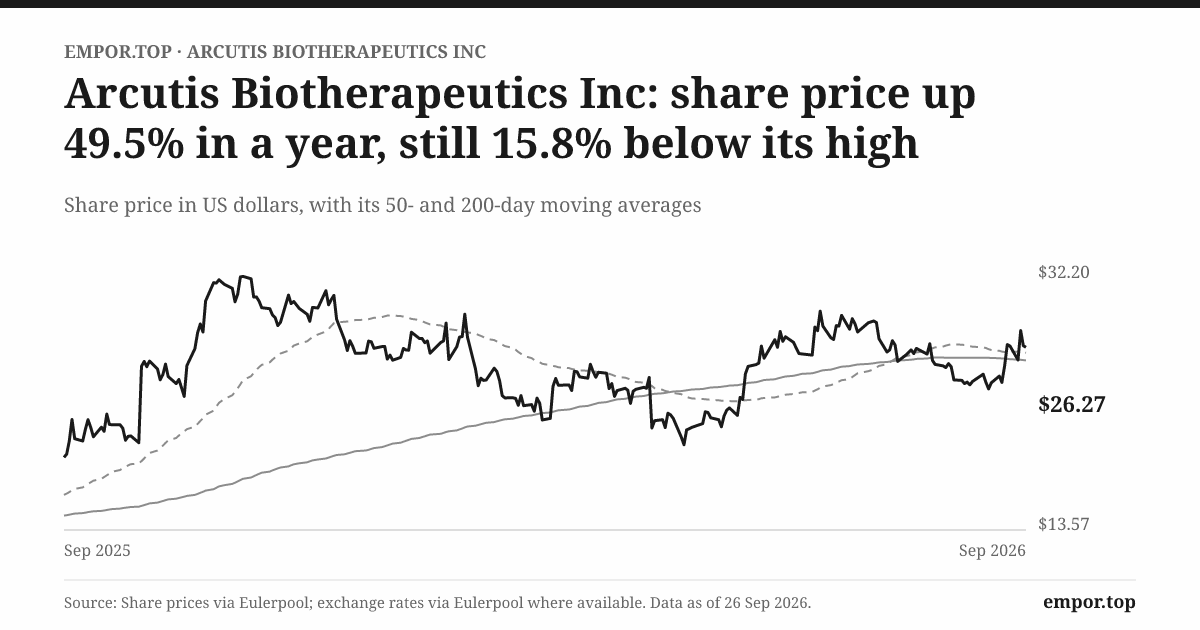
Just ten weeks after the August call, in October 2023, Arcutis priced a $100 million public offering comprising 32.5 million common shares at $2.50 apiece, alongside pre-funded warrants for 7.5 million shares and an overallotment option for an additional 6 million shares.[^23] Set against the $17.00 IPO price from January 2020, the company was forced to raise capital at roughly one-seventh of its initial public valuation.19[^23] Issuing approximately 40 million share equivalents represented massive equity dilution for a company of Arcutis's market capitalization, penalizing existing shareholders near the cyclical trough of the stock.
To be sure, management's August assertion regarding its cash balance was technically accurate, and year-end cash and investments of $272.8 million confirmed that the offering successfully stabilized the balance sheet.22 However, the business was also saddled with $201.8 million in long-term debt and burning cash at a pace that left its net liquidity cushion precariously thin.22 The market's verdict on management's runway guidance was rendered directly in the collapse of the share price.
On that record, the claim of disciplined capital stewardship during the 2022–2023 commercial launch is falsified. The gross-to-net learning curve proved steeper and more protracted than guided, launch cash generation fell short of expectations, and existing equity holders absorbed the cost. Whether management absorbed the operational lessons from that liquidity crisis would be answered by its next strategic maneuver.
The Benchmark: Dermavant's Fate
The contrasting path of Dermavant Sciences provides a direct benchmark for the commercial headwinds facing topical non-steroidals. While Vtama reached the market first, its clinical profile introduced real-world friction: pivotal trial data documented folliculitis—inflammation of hair follicles—in 20% of treated patients, compared with 1% in the vehicle cohort, even though only 2.8% of participants ultimately discontinued therapy because of it.23 In daily clinical practice, managing visible follicular reactions required additional physician counseling that slowed prescriber enthusiasm.
The financial toll of those commercial dynamics materialized in September 2024, when Organon agreed to acquire Dermavant for just $175 million in upfront cash, supplemented by a $75 million milestone tied to atopic dermatitis approval and up to $950 million in downstream commercial thresholds.20 That modest upfront consideration for an FDA-approved franchise demonstrated how sharply the broader market had discounted standalone commercial-stage topical biotechs.
While Dermavant's discounted sale highlights the commercial advantages of Zoryve's cleaner safety label, lower list price, and multi-indication breadth—factors consistent with Arcutis's subsequent category leadership—it also underscores that in late 2023, Arcutis was hardly viewed as an inevitable winner.5 Facing a depleted equity valuation and mounting debt obligations, the company urgently needed an operational catalyst. It had one waiting on the FDA's regulatory calendar.
VII. The Turnaround: Seborrheic Foam, Atopic Dermatitis, and Cash Flow Inflection (2024–2026) (2:05 – 2:32)
December 2023: The Dandruff That Wasn't
Seborrheic dermatitis is a chronic skin disorder that few patients recognize by name, despite its widespread prevalence. It manifests as red, flaky, grease-crusted plaques on the scalp, eyebrows, nasolabial folds, and chest; in its mildest manifestation, it is commonly dismissed as dandruff. For decades, routine clinical management was restricted to generic antifungal shampoos and intermittent courses of topical corticosteroids. As Arcutis Chief Medical Officer Patrick Burnett observed in August 2023, the condition had gone decades without a newly approved drug class.7
The regulatory breakthrough came in December 2023, when the FDA approved Zoryve foam 0.3% for seborrheic dermatitis in patients aged nine and older, with commercial distribution launching in late January 2024.[^25]22 Though overshadowed at the time by broader biotech headwinds, that approval proved to be the pivotal catalyst in Arcutis's corporate recovery.
Why the Foam Changed the Math
In plaque psoriasis, Zoryve had to fight for commercial share against entrenched generic steroids, Dermavant's Vtama, and oral systemic therapies. In seborrheic dermatitis, the foam entered a specialty market with no modern branded competitors, targeting a clinical population that was already visiting dermatology practices. As Burnett pointed out, dermatologists treat "just as many seborrheic dermatitis patients in their office as they do psoriasis."7
Commercial returns rapidly substantiated that operational thesis. By the second quarter of 2026, the foam generated $67.4 million of the company's $129.9 million in net product revenue, accounting for more than half of total franchise sales.4 What had been conceived as a line extension evolved into the company's primary commercial engine, while simultaneously lengthening the franchise's intellectual property horizon from the cream's contested 2037 expiration toward the foam's 2042 Orange Book protection.6
Early 2024: Refilling the Tank at a Better Price
With the commercial foam launch underway, Arcutis returned to the equity capital markets in February 2024 from a position of relative strength. It priced a follow-on offering at $9.50 per share, raising $172.5 million in gross proceeds after the underwriters fully exercised their overallotment option.[^26] While the price remained well below the $17.00 IPO valuation, it stood nearly four times higher than the distressed $2.50 trough of October 2023, signaling renewed institutional backing for the multi-indication strategy.
Management augmented that equity offering with non-dilutive licensing agreements. In February 2024, Arcutis out-licensed Japanese development and commercial rights for topical roflumilast to 佐藤製薬 Sato Pharmaceutical for $25.0 million in upfront cash, up to $10.0 million in regulatory milestones, up to $30.0 million in commercial sales milestones, and tiered low-double-digit royalties.[^27]2 That followed an August 2023 partnership with 华东医药 Huadong Medicine covering Greater China and Southeast Asia, which had generated $30.4 million in upfront revenue.622
These regional agreements delivered on management's August 2023 guidance to harvest non-dilutive capital through ex-U.S. partnering.7 While the licensing proceeds materialized after the emergency equity dilution rather than in time to avert it, they provided crucial balance-sheet reinforcement.
July 2024: Eczema, the Biggest Market
In July 2024, the FDA approved Zoryve cream 0.15% for mild-to-moderate atopic dermatitis in patients six and older.[^28] Atopic dermatitis represented Arcutis's largest addressable patient population by volume, as well as the clinical indication where parental concern over chronic corticosteroid safety was most pronounced.6
The commercial differentiation against topical competitors remained centered on safety: Incyte's topical JAK inhibitor, Opzelura, carries a class-wide boxed warning for serious infections and malignancy, whereas Zoryve's label contains no boxed warning.111 In October 2025, Arcutis expanded its pediatric reach by launching a 0.05% formulation for children aged two to five, and it established an FDA action date of February 23, 2027, to review use in infants down to three months of age.34 Management estimated the U.S. infant eczema cohort at approximately one million patients, a population whose approved non-steroidal alternatives had been limited primarily to Pfizer's Eucrisa alongside mild topical steroids.5
Commercial monetization in atopic dermatitis progressed more deliberately than patient numbers suggested. In the second quarter of 2026, the 0.15% and 0.05% eczema creams generated a combined $27.1 million in product revenue, trailing the $35.3 million recorded by the original 0.3% psoriasis cream.4 The atopic dermatitis franchise expanded Arcutis's clinical relevance, but its revenue contribution remained an ongoing development rather than an immediate revenue surge.
May 2025: Scalp and Body Psoriasis
In May 2025, the FDA approved Zoryve foam for plaque psoriasis involving the scalp and body in patients 12 and older, with commercial distribution starting in June.[^29]16 The approval enabled dermatologists to prescribe a single branded agent across varied anatomical sites, pairing the cream on exposed plaques with the aerosol foam for hair-bearing regions. In June 2026, the FDA cleared the 0.3% cream for pediatric plaque psoriasis down to two years of age, representing the franchise's seventh regulatory approval in four years.45
Gross-to-Net: The Promise Kept
The reimbursement metric that had precipitated the 2023 liquidity crunch became the foundation of the turnaround. Across the first and second quarters of 2026, management reported that gross-to-net deductions had stabilized in the 50% range, with Chief Financial Officer Latha Vairavan projecting on the August 2026 earnings call that deductions would "titrate down to the low fifties" by year-end as operational gains leveled off.5 Formulary breadth also broadened in January 2026 when Zoryve secured Medicare access, establishing non-preferred coverage for roughly one out of every three Medicare beneficiaries.3
This stabilization resolved the core credibility test from the commercial launch. On the August 2023 earnings call, executive leadership had pledged that gross-to-net deductions would eventually normalize within a 40% to 60% band.7 Three years later, realized net pricing settled squarely inside that range. The timeline took longer than initially projected, imposing severe dilution on earlier equity investors, but management ultimately fulfilled its reimbursement target.
Deleveraging
Fortified liquidity enabled Arcutis to address its debt structure. In August 2024, the company amended its credit facility with SLR Investment Corp., and on October 8, 2024, it prepaid $100 million of the $200 million principal outstanding.[^30]24 The amended loan matures on August 1, 2029, carrying floating interest at 5.95% plus the greater of 2.50% or one-month SOFR, alongside a $6.95 million exit fee due on January 1, 2027.24 As of June 30, 2026, total debt stood at approximately $108.9 million against $238.9 million in cash, cash equivalents, and marketable securities.4
The prepayment curtailed interest expense and removed near-term covenant pressure. Retiring high-cost floating-rate debt with capital raised at improved equity valuations represented sound financial hygiene, though it reflected standard balance-sheet management rather than unusual financial engineering.
Myth vs. Reality: The Kowa "Pruning"
Industry accounts frequently portray the termination of the Kowa co-promotion agreement as disciplined operational streamlining. The commercial record reveals a more unsettled strategy. In July 2024, Arcutis contracted with Kowa Pharmaceuticals America to co-promote Zoryve to primary care physicians and pediatricians through July 2029 in exchange for sales commissions.24 Effective January 23, 2026, the two companies mutually terminated that agreement, with Arcutis incurring no ongoing financial penalties.6
What followed was a direct reversal of management's historical commercial guidance. In 2026, Arcutis appointed a dedicated primary care franchise leader and assembled an internal sales team focused on primary care and pediatric prescribers, deploying representatives into the field by late August 2026.255 On the August 2023 earnings call, Watanabe had stated unequivocally that Arcutis did not intend to build an internal primary care commercial infrastructure.7
Commercial strategies can legitimately adapt as balance sheets stabilize, and management justified the shift by noting that approximately 25,000 high-volume primary care doctors and pediatricians account for one-third of all U.S. topical prescriptions.5 Nevertheless, moving from a stated refusal to build an internal force, to an outsourced partnership, to a contract termination, and finally to an in-house sales expansion in less than three years represents an erratic commercial path. Building an internal sales force adds ongoing fixed overhead, an investment whose payoff management conceded would not materialize until 2027.5
The Financial Arc
The company's financial turnaround took shape over three operating years. In 2024, total revenue reached $196.5 million, supported by $166.5 million in net product sales, while the full-year net loss narrowed to $140.0 million.3 In 2025, net product revenue climbed 123% to $372.1 million, trimming the full-year net loss to $16.1 million as the company achieved its first profitable quarter in the fourth quarter.3 That commercial expansion continued through the first half of 2026, delivering quarterly product revenues of $105.4 million in the first quarter and $129.9 million in the second quarter.254
The first quarter of 2026 illustrated the seasonal mechanics of commercial dermatology. Net product revenue dropped 17% sequentially from the fourth quarter of 2025, which Arcutis attributed to routine first-quarter patient copay deductible resets and insurer policy shifts, causing the company to slip back into an $11.3 million quarterly net loss.25 This winter deceleration is an inherent structural feature of the U.S. prescription drug market that recurs at the start of each calendar year.
Where the Money Goes
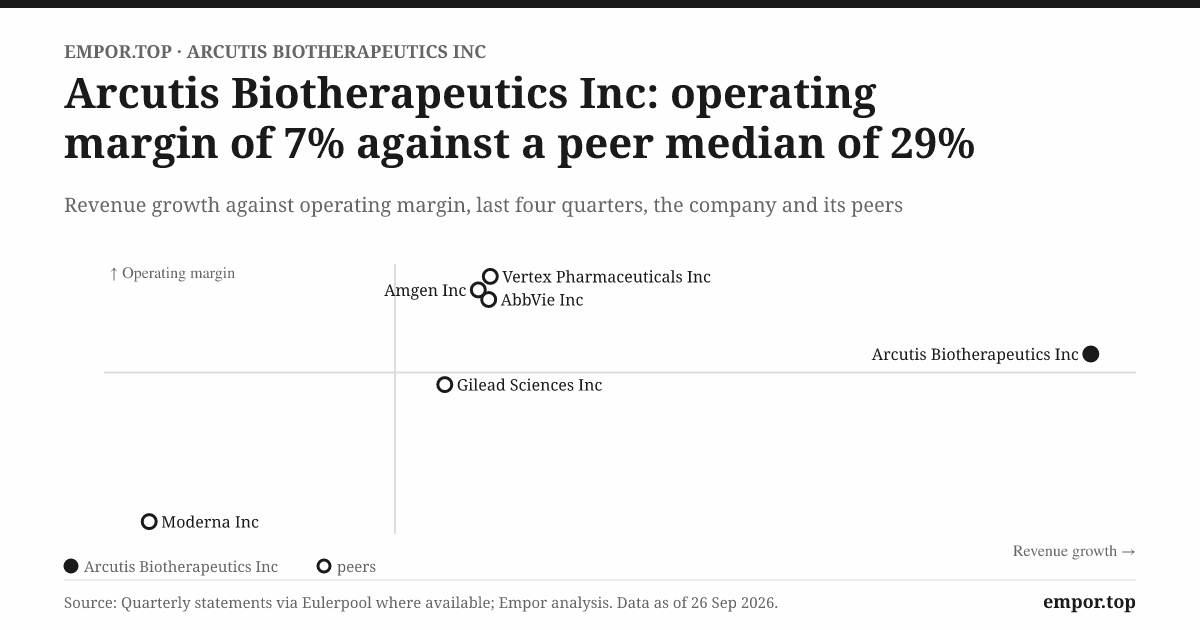
The cost structure explains why sustained profitability arrived slowly despite rapid sales growth. In 2025, cost of sales was just $36.7 million against $372.1 million in product revenue, demonstrating the high gross margins inherent in topical small-molecule manufacturing.3 The decisive cost center was commercial execution: SG&A totaled $274.6 million for the year, while R&D stood at $77.1 million.3 In practical economic terms, Arcutis operates as a commercial marketing and sales organization built around a high-margin specialty asset.
The financial inflection was also more recent and narrow than headline figures indicate. Total cash and investments dropped from $228.6 million at year-end 2024 to $191.1 million by mid-2025, and across full-year 2025 the business used $5.6 million in operating cash flow despite the profitable fourth quarter.163 Commercial self-funding is an operating condition established over the last few quarters, not a protracted operational trend.
Myth vs. Reality: "Fixed" Commercial Infrastructure
A common bullish thesis asserts that Arcutis's commercial infrastructure is largely fixed, allowing incremental revenue dollars to flow directly to operating profit. The financial disclosures contradict that view. In the second quarter of 2026, SG&A expenses rose 19% year-over-year, driven primarily by headcount costs and the ongoing expansion of the field sales organization.45 Commercial expenditures have broadened to fund the dedicated primary care sales team, a virtual health platform, and direct-to-consumer advertising campaigns featuring public figures such as Tori Spelling and professional golfer Max Homa.5
Although net revenue grew faster than operating costs—enabling quarterly profitability—the underlying expense structure is increasing rather than remaining fixed. Management stated that it intends to reinvest operating cash flow "to inflect growth in 2027 and beyond."5 Operating leverage is evident, but a substantial portion of incremental gross profit is being spent as quickly as it is generated.
The historical evidence provides a nuanced assessment. Clinical demand is established, with quarterly volume exceeding 280,000 prescriptions in the second quarter of 2026 and securing market share leadership in the non-steroidal topical class.5 Realized pricing has settled into a predictable corridor. Operating leverage has arrived, but margins remain slim: second-quarter 2026 SG&A of $82.1 million still consumed nearly two-thirds of net product revenue.4 Furthermore, Vairavan affirmed that "our focus as an innovative biotech remains on investing" rather than maximizing immediate margins.5 How effectively those reinvested dollars defend Arcutis's market position against eventual generic entrants and therapeutic rivals forms the next phase of the corporate story.
VIII. Playbook & The 7 Powers Analysis (2:32 – 2:50)
The Exam-Room War Game
Picture a dermatologist with twelve minutes and a parent holding a four-year-old with facial eczema. The clinician faces three immediate options: a topical corticosteroid the parent fears applying to a child's face, a topical JAK inhibitor carrying a boxed warning, or Zoryve. Yet clinical preference is only half the equation; insurance formularies, prior authorization requirements, and copay tiers dictate what actually clears the retail pharmacy counter. The durability of Arcutis's business hinges on how consistently that consultation ends with a filled roflumilast prescription—and how much net revenue the company collects when it does.
Hamilton Helmer's 7 Powers framework evaluates the structural mechanisms that allow an enterprise to generate persistent economic returns. Applied to Arcutis, the model reveals a business driven by disciplined commercial execution and tactical positioning rather than unbreachable structural moats, with each power reflected in operational evidence rather than an abstract scorecard.
Cornered Resource: The Patent Estate
Arcutis's primary candidate for a cornered resource is its secondary formulation and method-of-use patent estate, with exclusivity claimed through 2037 for the cream and 2042 for the foam.6 The Paragraph IV challenge from Padagis demonstrates that this estate is actively contested rather than definitively cornered. Yet the operational composition of that portfolio provides an important structural cushion: the aerosol foam, which generates more than half of net product sales, carries a patent runway extending five years beyond the cream, meaning the commercial franchise most exposed to the 2037 expiration represents a shrinking share of total revenue.
Process Power: Formulation and Clinical Execution
Process power requires proprietary operational capabilities that rivals cannot readily replicate. The foremost evidence for Arcutis is its regulatory cadence: securing seven FDA approvals in four years across two delivery formats and three dosage concentrations.5 That sequence reflects exceptional clinical and regulatory navigation. The countervailing evidence, however, lies in its broader pipeline record: the same organization stumbled twice attempting to formulate and advance an in-licensed JAK inhibitor.1516 Furthermore, co-founder and chief technical officer David Osborne, who spearheaded the vehicle formulation chemistry, departed the company in September 2025.14 Process power has been demonstrated as a masterclass in exploiting roflumilast, but it has not been validated as a generalizable platform for other molecular scaffolds.
Branding: The "Un-Steroid"
In prescription specialty pharmaceuticals, brand power translates into ingrained clinical prescribing habits. Arcutis has established strong category momentum, capturing a market share just shy of 50% within the branded non-steroidal class and driving steady prescription expansion.5 However, management's frequent assertion that Zoryve is "uniquely positioned to supplant topical corticosteroids" remains an executive ambition rather than an established commercial fact.5 Inexpensive generic corticosteroids continue to dominate dermatology by total volume, with Arcutis itself acknowledging in 2023 that the steroid category was roughly twenty times the size of the non-steroidal market.7 Converting prescribers away from branded rivals is one achievement; displacing a sixty-year generic standard of care is a vastly heavier lift.
Scale Economies: A Concentrated Prescriber Base
In its initial commercial phase, Arcutis benefited from the natural scale efficiencies of specialty dermatology. In 2023, the commercial team targeted approximately 13,000 high-volume prescribers out of roughly 20,000 practicing dermatology clinicians nationwide.7 A concentrated specialist audience allowed a lean sales organization to achieve broad reach, enabling sequential cream and foam indications to leverage the same sales calls and physician relationships.
The structural ceiling of that scale advantage becomes apparent once the company ventures outside dermatology. According to management, roughly half of all prescription-treated patients across psoriasis, atopic dermatitis, and seborrheic dermatitis receive care from non-dermatologists, drawing from an expansive pool of approximately 500,000 primary care providers across the United States.5 Reaching that fragmented cohort requires a fundamentally different, far more capital-intensive commercial apparatus. That overhead burden is already registering on the company's cost base: after expanding the core dermatology field force again in May 2026, Arcutis added ongoing fixed overhead by establishing an internal primary care and pediatric sales team to address an audience that is broader and vastly more dispersed.255
Switching Costs and Network Effects
Switching costs in topical pharmaceuticals remain structurally modest. While clinical inertia favors keeping a patient on a regimen that successfully manages disease symptoms, pharmacy benefit managers can readily disrupt that continuity through step therapy or formulary exclusions. On the August 2026 earnings call, management conceded that certain new patients must still "step through another product" before securing coverage for Zoryve.5 Once disease control is achieved, patient and prescriber reluctance to risk a flare provides practical friction against switching, but that behavioral barrier does not constitute an economic lock-in. Network effects are entirely absent; one patient applying Zoryve creates no inherent clinical utility or network advantage for the next.
Counter-Positioning
Counter-positioning provides perhaps the most compelling strategic defense in Arcutis's business model. Pharmaceutical conglomerates marketing injectable biologics priced at tens of thousands of dollars annually face little economic incentive to aggressively champion an intermediate topical non-steroidal that might delay or divert a patient's progression to their multi-billion-dollar systemic franchises. At the same time, generic steroid manufacturers lack the margin profile and commercial infrastructure required to promote branded alternatives. This dynamic leaves Arcutis occupying the "missing middle"—a therapeutic tier that incumbent biopharma giants are structurally disincentivized to disrupt. The critical caveat is that Organon, which acquired Dermavant and its competing topical Vtama in 2024, operates without an internal biologic franchise to protect and faces no such structural disincentive.20
Porter's Five Forces: The Buyer Is King
Viewed through Porter's Five Forces, the competitive environment is governed overwhelmingly by buyer power. Three consolidated pharmacy benefit managers dictate formulary access for the vast majority of commercially insured Americans. The liquidity crisis of 2022 and 2023 was fundamentally a manifestation of buyer leverage, and even with normalized reimbursement in 2026, gross-to-net deductions hovering in the 50% range mean intermediaries, statutory discounts, and copay programs continue to claim roughly half of every list-price dollar.5
The threat of substitutes represents a second formidable force: cheap, widely accessible generic corticosteroids remain the default first-line standard of care, establishing a price floor that branded therapies cannot undercut. Supplier power appears manageable, though the company's reliance on specialized aerosol foam contract manufacturing introduces an operational concentration risk warranting scrutiny.5 The threat of new entrants is moderate; while topical drug delivery presents formidable chemical barriers, multinational pharma pipelines regularly evaluate novel anti-inflammatory mechanisms, and Organon possesses commercial scale and international infrastructure that Dermavant lacked as an independent startup.20
Rivalry within the branded non-steroidal topical segment is active but currently tilts in Arcutis's favor. An early validation of payer preference surfaced in 2023, when the U.S. Department of Veterans Affairs established clinical guidelines requiring patients to step through Zoryve before accessing an alternative branded non-steroidal.7 In that setting, institutional payers treated Zoryve's lower wholesale list price and favorable tolerability profile as grounds for preferred formulary placement—a tangible example of management's initial pricing posture yielding practical commercial advantages.
The composite strategic profile is unambiguous. Arcutis's competitive advantages derive from operational execution, rapid clinical cadence, and astute counter-positioning rather than unbreachable legal fortresses or self-reinforcing network moats. This is an enterprise that must continually win prescribers and payers on the ground rather than coast behind a natural monopoly. That operating reality poses the central question for the company's next chapter: how management chooses to allocate capital now that its commercial ground war is generating self-sustaining cash flow.
IX. The Bear vs. Bull Case, Risk Radar & Valuation Stress Test (2:50 – 3:10)
The Activist's Opening Question
Picture a skeptical long-short investor walking into Arcutis's boardroom in September 2026. The opening slide would not center on Zoryve's clinical efficacy. It would confront capital allocation: an enterprise that drifted perilously close to insolvency three years earlier has just reached profitability, and management is already informing investors of its intent "to continue to invest the capital we generate back into our business."5 Where, precisely, is that capital directed, and what does the historical record suggest about the odds of those bets paying off?
Is Arcutis a One-Trick Pony?
For now, the commercial reality is indisputable: every dollar of product revenue derives from roflumilast.4 Management delineates its strategic roadmap across three pillars: expanding Zoryve within approved indications, advancing it into new disease areas, and constructing a proprietary pipeline beyond it.5 The first pillar has delivered; the second and third remain unfulfilled commitments.
The label-expansion pillar faces immediate clinical milestones. A Phase 2 vitiligo readout and go/no-go decision is scheduled for the fourth quarter of 2026, followed by a hidradenitis suppurativa readout in the first quarter of 2027.4 Beyond those indications, executive leadership has highlighted prospective clinical trials in nail psoriasis, chronic pruritus, and cutaneous adverse effects from oncology immunotherapies, asserting that the company possesses "more options, probably, than we have resources," supported by case reports spanning 47 distinct dermatological conditions.5
In specialty pharmaceutical investing, however, anecdotal validation does not equal commercial value. Case reports are not controlled clinical trials, and clinical trials do not guarantee net revenue. Expanding roflumilast carries demonstrably lower biological risk than earlier formulation misadventures, because the underlying molecule is already proven to engage inflammatory targets in skin. Yet a skeptical investor would observe that vitiligo—the franchise's opening expansion test—is already contested territory occupied by Incyte's Opzelura, and Burnett acknowledged that Arcutis would need to establish clear superiority in either efficacy or onset speed to present a compelling alternative.5
The Next-Gen Bet: ARQ-234
The centerpiece of the company's diversification pillar is ARQ-234, an engineered fusion protein designed to stimulate the CD200 receptor, an inhibitory checkpoint that regulates immune homeostasis. The first participant enrolled in a Phase 1a/1b clinical trial on March 3, 2026; the study is designed to evaluate approximately 125 participants, including adult patients presenting with moderate-to-severe atopic dermatitis, administered via subcutaneous injection.17
That route of administration fundamentally alters the strategic terrain. ARQ-234 is not a topical therapy; it is a systemic candidate designed to enter the crowded biologic arena dominated by Sanofi and Regeneron's Dupixent alongside an emerging pipeline of next-generation monoclonal antibodies. Management contends that the asset could address both biologic-naive individuals and patients who relapse following treatment with interleukin-13 inhibitors, while maintaining that the company will not disclose clinical data until the complete study wraps up.5 For now, ARQ-234 represents early-stage optionality stripped of human proof-of-concept data. In light of Arcutis's historical pipeline record outside roflumilast, prudent analysis requires treating the program as unproven until clinical efficacy is established in peer-reviewed human trials.
Burnett argued on the August 2026 earnings call that trial enrollment should accelerate because rival OX40-targeting programs had retreated from the competitive field, leaving patients and investigators eager to explore novel immunological pathways.5 That argument cuts both ways: the withdrawal of a high-profile mechanism underscores how routinely novel immunological hypotheses fail in atopic dermatitis. Arcutis would enter that complex battlefield as a mid-tier commercial firm with a solitary early-stage candidate, competing against global pharmaceutical giants with multi-billion-dollar commercial and clinical development budgets.
Concurrently, leadership is actively scouting for external acquisitions. Watanabe stated that Arcutis is "seeing a marked increase in deal flow" across dermatology and adjacent inflammatory indications, signaling that business development and external licensing "will likely play a central role."5 For an executive team whose previous two external clinical bets outside roflumilast were terminated, that acquisition posture warrants critical caution rather than unreserved optimism.
The Risk Radar
Arcutis's operational and financial risks are concentrated across five distinct exposures.
The foremost risk remains intellectual property. The procedural stay negotiated with Padagis will eventually dissolve or conclude in a negotiated settlement, and any settlement will formalize the calendar date for generic cream entry.18
The second risk is net realized pricing. If pharmacy benefit managers extract steeper rebate concessions as prescription volumes expand, gross-to-net deductions could stall or deteriorate, particularly given management's guidance that gross-to-net gains will moderate going forward.5
The third risk involves execution across unproven commercial channels. Building a dedicated primary care field force, launching a direct-to-consumer virtual health platform in June 2026, and partnering with an artificial-intelligence prescription workflow tool add fixed operational expenses whose economic return remains unquantified.5 Arcutis emphasizes that clinicians on the telehealth platform operate independently and that the company exercises no influence over diagnostic or prescribing decisions—a governance firewall that will face close scrutiny as federal regulators increase oversight of pharmaceutical-sponsored digital health networks.5
The architecture of that virtual platform illustrates management's approach to demand generation. Watanabe explained that prospective patients navigating to the corporate product portal can schedule a same-day telehealth consultation with a board-certified dermatologist; if roflumilast is deemed clinically appropriate and prescribed, a national hub pharmacy coordinates prior authorizations, adjudicates insurance coverage, and facilitates home delivery, ensuring that out-of-pocket costs remain "no different than if they went to the dermatologist's office."5 Watanabe specifically contrasted this reimbursed specialty model with cash-pay consumer telehealth platforms utilized for GLP-1 weight-loss medications.5
While that structure addresses real-world clinical friction—overcoming regional shortages of dermatologists and months-long appointment backlogs—it also creates regulatory and financial vulnerability. Manufacturer-funded funnels bridging public advertising to digital prescription writing invite regulatory scrutiny regarding marketing inducement, while the commercial return on digital customer acquisition remains opaque. When questioned on second-quarter 2026 conversion rates from patient intake to filled prescriptions, Watanabe acknowledged that it remained "still very early days."5 The channel's true commercial return remains unverified.
The fourth risk is structural revenue seasonality. The sharp contraction observed in the first quarter of 2026—when commercial deductible resets and annual formulary reauthorizations temporarily depressed net realized sales—represents an annual industry fixture that will cause recurring first-quarter revenue volatility.25
Finally, corporate disclosures warrant ongoing scrutiny: during the August 2026 earnings presentation, management cited total outstanding debt of $101.9 million, whereas the corresponding financial filing documented a current portion of approximately $6.95 million alongside a long-term principal balance of $101.95 million—a modest accounting divergence in debt characterization, but a reminder that balance-sheet metrics require exacting examination.54
Management Credibility: Two Eras, and the Revolving Door
Frank Watanabe has directed Arcutis since its founding era, establishing an executive track record that divides into two contrasting chapters. During 2022 and 2023, leadership misjudged launch dynamics and gross-to-net drag, forcing existing equity holders to absorb punitive dilution in the $2.50 equity offering. From 2024 onward, however, the executive team delivered on its gross-to-net targets, increased annual sales guidance three times within twelve months, prepaid half its term loan, and guided the enterprise into positive operating cash flow and net profitability.347[^23][^30]
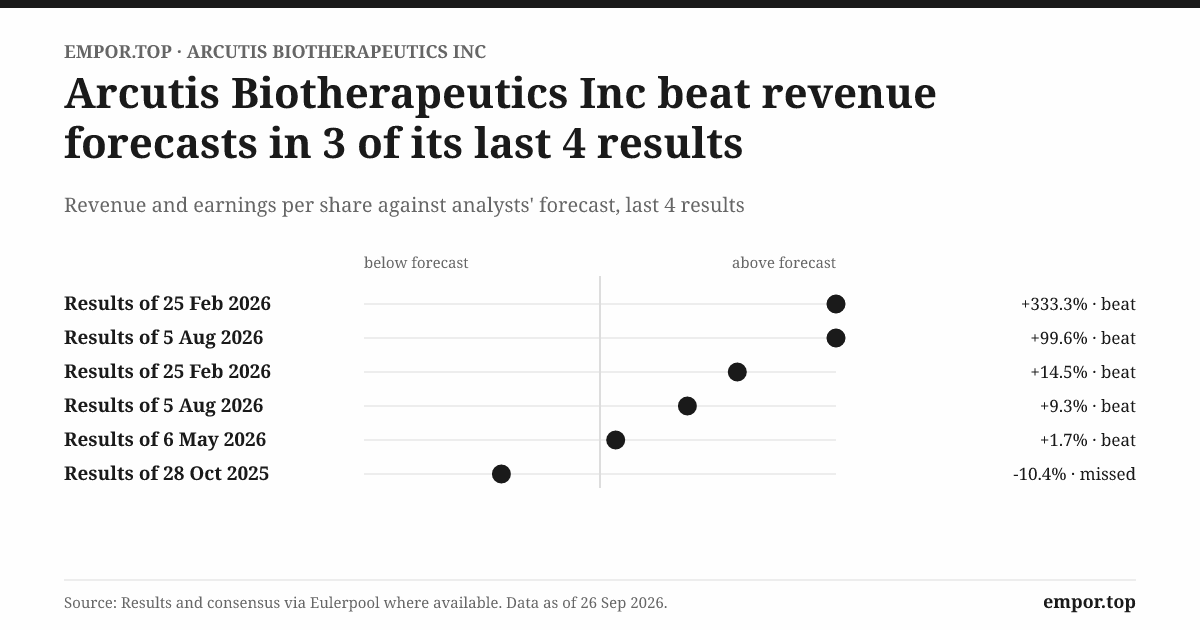
Forecasting discipline in the post-crisis era has noticeably improved. Management lifted its 2026 revenue projections twice, while Watanabe clarified on the August 2026 call that the company does not anticipate adjusting full-year targets every subsequent quarter.5 While exceeding a conservatively framed baseline is inherently simpler than defending aggressive targets, the pattern of upward revisions reflects steadier operational control.
The conspicuous organizational vulnerability lies in commercial leadership turnover. Ken Lock oversaw commercial operations at launch in 2022; by mid-2023, Ayisha Jeter had assumed interim commercial leadership; and in August 2026, Arcutis disclosed that Chief Commercial Officer Todd Edwards would depart after roughly three years, replaced on an interim basis by former Zura Bio chief executive Rob Lisicki.2175 That marks three commercial chiefs alongside two interim transitions in four years—a concerning degree of executive churn for a business whose market capitalization depends fundamentally on frontline commercial sales execution.
Financial leadership has demonstrated greater stability. In April 2025, Arcutis elevated Latha Vairavan—who joined the organization in March 2020 following a twelve-year tenure at Amgen—to chief financial officer upon the retirement of David Topper.26 Vairavan's quarterly commentary has provided concrete transparency, offering explicit parameters on gross-to-net trajectory and cost progression that institutional investors require in a reimbursement-driven business model.5
Capital Allocation: A Revised Verdict
Evaluating Arcutis as a tale of two distinct management eras is supported by the operational data, but that distinction comes with a critical caveat. The strategic choices executed between 2024 and 2026—raising equity capital at substantially higher valuations, monetizing ex-U.S. commercial rights, and retiring expensive floating-rate debt—demonstrated sound balance-sheet stewardship. Yet the enterprise has not yet confronted the definitive test of corporate capital allocation: deploying discretionary free cash flow. Thus far, leadership's declared intention is to funnel emerging operating cash back into domestic commercial expansion, experimental label extensions, and external business development.5
The thesis that Arcutis has evolved into a disciplined capital allocator remains provisional rather than demonstrated. That claim will be validated or refuted by two near-term milestones: whether forthcoming Phase 2 readouts in vitiligo and hidradenitis suppurativa result in rigorous stop-or-go governance rather than sunk-cost clinical persistence, and the purchase price, biological rationale, and clinical maturity of any external assets management acquires.
The Bull Case
The bull thesis argues that Zoryve establishes itself as the undisputed first-line non-steroidal topical across specialty dermatology and gains durable adoption throughout primary care, steadily taking volume from generic corticosteroids each year. In this scenario, anticipated regulatory clearance for infant eczema in 2027 unlocks an unaddressed pediatric market of approximately one million patients, while the foam's intellectual property estate protects the franchise's core commercial revenue through 2042, long after the cream's initial patents expire.46 As commercial infrastructure matures, operating expense growth moderates, operating margins expand toward specialty-pharma benchmarks, and balance-sheet cash accumulates rapidly. A durable, profitable commercial franchise of that scale could ultimately command strategic acquisition interest from diversified biopharmaceutical conglomerates seeking high-margin dermatology cash flows, though no formal discussions or takeover interest have been disclosed.
The Bear Case
The bear thesis begins with intellectual property vulnerability. An unfavorable legal ruling or an early negotiated settlement in the Padagis litigation could introduce generic roflumilast cream well before 2037, while generic manufacturers could file Paragraph IV challenges against the aerosol foam formulations.18 Simultaneously, pharmacy benefit managers could leverage their gatekeeper dominance to force gross-to-net concessions back above 60% as Zoryve's net spending reaches scale. In atopic dermatitis, commercial expansion could decelerate as oral small molecules and injectable biologics advance into earlier treatment lines. Most critically, executive leadership could deplete newly generated operating cash flow chasing speculative clinical assets outside its core delivery franchise, replicating the capital destruction of the ARQ-252 and ARQ-255 programs at greater scale.1516
The core investment tension is straightforward. Arcutis prospers if clinician prescribing habits transition away from topical corticosteroids faster than pharmacy benefit managers and generic challengers can erode realized unit economics. It falters if its competitive moat proves to be merely a temporary formulation head start bound to an expiring patent clock, and if management interprets initial commercial profitability as a mandate to diversify through unproven acquisitions. Which trajectory prevails will be determined by a small, unforgiving set of operating metrics.
X. Epilogue & Core KPIs to Watch (3:10 – 3:20)
Ten Years On
In June 2026, Arcutis marked its tenth anniversary, with Watanabe noting on the company's earnings call that Zoryve had treated "nearly 1 million people" suffering from chronic inflammatory skin conditions.5 The corporate arc reflects a notable transformation: from a startup licensing the topical rights to an unheralded oral COPD pill, through a dilutive $2.50 equity trough that pushed the business to the brink, to a profitable enterprise commercializing four formulations built entirely on a single active molecule.14[^23]
The commercial journey, however, remains far from settled. Its subsequent chapter will be shaped less by regulatory reviews in Silver Spring than by pharmacy benefit managers, generic filers, and management's capital allocation discipline. For investors tracking the durability of the turnaround, three operational indicators capture the franchise's trajectory.
KPI 1: Prescription Volume, by Product
Total prescription volume, which surpassed 280,000 in the second quarter of 2026, provides the direct measure of whether dermatologists and primary care clinicians are actively switching patients away from topical corticosteroids.5 The underlying mix is equally critical: the foam's commercial share demonstrates the adoption curve of the franchise's longest-protected asset, while volume growth across the 0.15% and 0.05% creams indicates whether the substantial atopic dermatitis market is translating into durable recurring demand.4
KPI 2: Gross-to-Net and Net Revenue per Prescription
Gross-to-net deductions represent the financial variable that precipitated the 2023 liquidity crisis before its stabilization underpinned the recovery. Management projects that deductions will settle in the low 50% range by the end of 2026.5 Whether that corridor holds as Medicare coverage expands and annual commercial payer contracts reset will test whether Zoryve possesses genuine pricing durability, while any renewed deterioration would signal that pharmacy benefit managers are reasserting their pricing leverage.
KPI 3: Operating Cash Flow and What It Funds
Arcutis generated $12.6 million in operating cash flow during the second quarter of 2026, and management guided toward positive operating cash flow through the rest of the year.45 The headline cash number matters less than how capital is deployed. The critical markers include whether operating cash accumulates on the balance sheet, whether management retires additional principal on its term loan ahead of its 2029 maturity, and the price discipline and clinical maturity governing any external acquisitions.24
The Enduring Lesson
The broader lesson of the Arcutis narrative centers on the economics of execution rather than novel molecular biology. In specialty pharmaceuticals, the rarest capability is often not discovering a new biological mechanism, but navigating the unglamorous operational friction surrounding a known one: engineering a well-tolerated delivery vehicle, setting a competitive list price, securing reimbursement through payer tollbooths, and preserving balance-sheet liquidity long enough to achieve commercial scale. Arcutis executed the formulation effectively, endured years of painful reimbursement drag, and survived its cash squeeze with minimal room to spare.
Yet the company's operating record also contains an essential counter-lesson. The drug-delivery capabilities that built the roflumilast franchise failed across two attempts with a separate molecular class, and an executive team that once pledged never to build an internal primary care field force has deployed one. The central question for the decade ahead is whether Arcutis matures into a diversified, multi-asset specialty pharma enterprise, or remains what it has been since 2021: a lucrative single-molecule franchise whose long-term equity value still hinges on a stayed patent dispute in Delaware and a pharmacy benefit manager's rebate spreadsheet.
References
-
ZORYVE (roflumilast) cream Prescribing Information — DailyMed, U.S. National Library of Medicine ↩↩↩↩↩↩↩↩↩↩↩
-
Arcutis Biotherapeutics Form 10-K for the Fiscal Year Ended December 31, 2024 — U.S. Securities and Exchange Commission, 2025-02 ↩↩↩↩↩↩↩↩
-
Arcutis Announces Fourth Quarter and Full Year 2025 Financial Results and Provides Business Update — GlobeNewswire, 2026-02-25 ↩↩↩↩↩↩↩↩↩↩↩↩
-
Arcutis Announces Second Quarter 2026 Financial Results and Provides Business Update — GlobeNewswire, 2026-08-05 ↩↩↩↩↩↩↩↩↩↩↩↩↩↩↩↩↩↩↩
-
Arcutis (ARQT) Q2 2026 Earnings Call Transcript — The Globe and Mail / The Motley Fool, 2026-08-05 ↩↩↩↩↩↩↩↩↩↩↩↩↩↩↩↩↩↩↩↩↩↩↩↩↩↩↩↩↩↩↩↩↩↩↩↩↩↩↩↩↩↩↩↩↩↩↩↩↩↩
-
Arcutis Biotherapeutics Form 10-K for the Fiscal Year Ended December 31, 2025 — U.S. Securities and Exchange Commission, 2026-02 ↩↩↩↩↩↩↩↩↩
-
Arcutis Biotherapeutics, Inc. (NASDAQ:ARQT) Q2 2023 Earnings Call Transcript — Insider Monkey, 2023-08-10 ↩↩↩↩↩↩↩↩↩↩↩↩↩↩↩↩↩↩↩↩↩↩↩↩
-
Amgen to Acquire Otezla for $13.4 Billion in Cash in Connection with Celgene-Bristol Myers Squibb Merger — Amgen, 2019-08-26 ↩
-
Arcutis Biotherapeutics Form S-1/A Registration Statement — U.S. Securities and Exchange Commission, 2020-01 ↩↩↩↩
-
FDA Approves Arcutis' ZORYVE (Roflumilast) Cream 0.3% for the Treatment of Plaque Psoriasis in Individuals Age 12 and Older — Arcutis Biotherapeutics, 2022-07-29 ↩↩↩↩↩↩↩↩
-
OPZELURA (ruxolitinib) cream Prescribing Information — DailyMed, U.S. National Library of Medicine ↩↩
-
Arcutis, Inc. Founded to Address Gap in Immuno-Dermatology Drug Development — Arcutis Biotherapeutics, 2019-04-23 ↩↩↩↩
-
Frank Watanabe, President and CEO — Arcutis Biotherapeutics ↩↩↩↩
-
Palvella Therapeutics Strengthens Leadership with Appointment of David W. Osborne, Ph.D. as Chief Innovation Officer — StockTitan, 2025-09-03 ↩↩↩
-
Arcutis Provides Update on Phase 2a Clinical Trial Evaluating ARQ-252 Cream as a Potential Treatment for Vitiligo — GlobeNewswire, 2021-07-01 ↩↩↩↩↩↩↩
-
Arcutis Announces Second Quarter 2025 Financial Results and Provides Business Update — Arcutis Biotherapeutics, 2025-08-06 ↩↩↩↩↩↩
-
Arcutis Begins Enrolling Phase 1a/1b Study Evaluating ARQ-234, a CD200R Agonist, in Healthy Volunteers and Adults With Atopic Dermatitis — GlobeNewswire, 2026-03-03 ↩↩
-
Arcutis and Padagis Agree to Stay Patent Lawsuit — GlobeNewswire, 2025-04-02 ↩↩↩↩↩
-
Arcutis Biotherapeutics Form 10-Q for the Quarter Ended March 31, 2020 — U.S. Securities and Exchange Commission, 2020-05 ↩↩
-
Organon to Acquire Dermavant Sciences, Maker of VTAMA (tapinarof) Cream — Organon, 2024-09-18 ↩↩↩↩
-
With 'bold experiment' in drug pricing, Arcutis aims to stand out in plaque psoriasis — MedCity News, 2022-08 ↩↩↩↩
-
Arcutis Announces Fourth Quarter and Full Year 2023 Financial Results and Provides Business Update — Arcutis Biotherapeutics, 2024-02 ↩↩↩↩↩↩↩
-
VTAMA (tapinarof) cream, 1% Prescribing Information — U.S. Food and Drug Administration, 2022-05 ↩
-
Arcutis Biotherapeutics Form 10-Q for the Quarter Ended September 30, 2024 — U.S. Securities and Exchange Commission, 2024-11 ↩↩↩↩
-
Arcutis Announces First Quarter 2026 Financial Results and Provides Business Update — GlobeNewswire, 2026-05-06 ↩↩↩↩↩
-
Arcutis Biotherapeutics Form 8-K: Chief Financial Officer Transition — U.S. Securities and Exchange Commission, 2025-04-10 ↩
 LinkedIn
 WhatsApp
 Reddit
 Hacker News
 Email
Email Kindle
 RSS Feed
 Spotify
 Apple Podcasts
 Amazon Music
 Audible
 YouTube